If you’ve ever exhibited at a trade show, you know the feeling.
You’ve invested in the booth, the signage, the team… and then the doors open, and people just walk by.
Some slow down. Most don’t.
So the real question isn’t just having a booth. It’s how to get people to actually stop.
After working a lot of events and seeing this play out in real time, here’s what actually makes the difference.
Most booths rely on passive attraction, nice visuals, a screen, maybe a giveaway.
That’s not enough anymore.
People don’t stop unless there’s a reason to stop right now. Something happening.
Something they can step into.
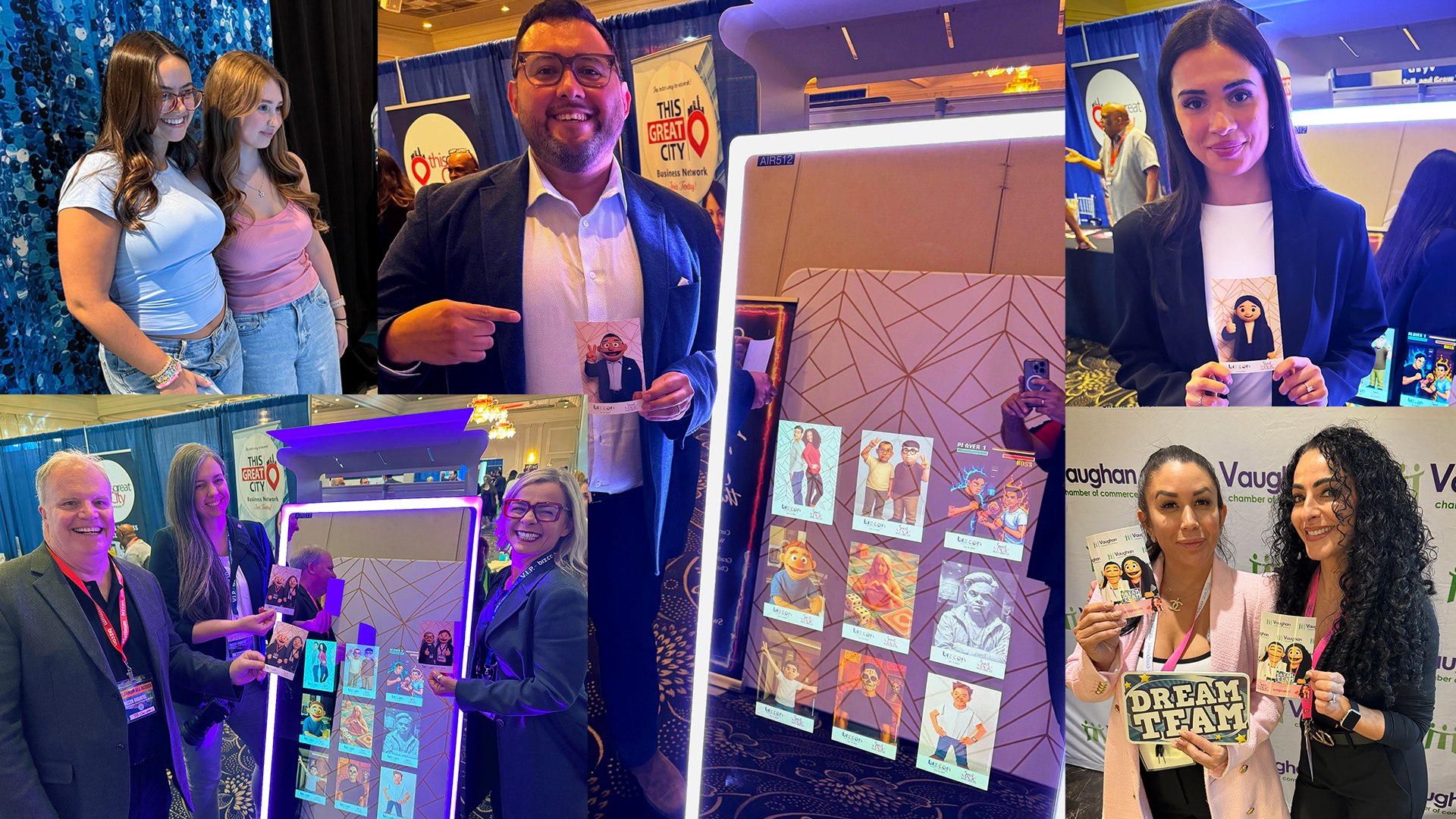
This is why interactive experiences work so well. When there’s a clear moment happening at a booth, something visual, interactive, and easy to step into, people get curious. They slow down. Then they step in.
This is where a lot of brands get it wrong.
They design their booth around their product, their messaging, their brand story.
But attendees are walking the floor thinking:
“What’s in this for me?”
The strongest booths flip that.
Instead of telling people about your brand, they give guests something to do, something personal, something they become part of.
That’s why experiences where guests create something of their own tend to outperform traditional setups every time.
If it’s not shareable, it’s limited to the people who physically walked by.
If it is shareable, your booth suddenly reaches far beyond the show floor.
We saw this firsthand at a Neutrogena pop-up at The Well in Toronto, the same kind of thinking that translates directly to trade show booths. Guests were lining up to meet and take photos with Spencer Barbosa, and more importantly, to capture something they were excited to share right away.
That shareability created energy around the space and kept pulling more people in.
That’s the difference between something people try… and something people talk about.
One mistake I see a lot is trying to fill the whole day.
In reality, attention comes in waves.
You’re much better off creating a high-energy window where your booth feels busy, engaging, and worth checking out, rather than stretching something mediocre across eight hours.
When a booth looks active, more people stop. When it looks quiet, people keep walking.
If people have to think too hard, they won’t do it.
The best activations are:
No instructions. No friction. Just walk up and go.
That’s something we focus on heavily in our setups, making sure the experience feels effortless from the guest’s perspective while still delivering something high quality.
And I don’t mean another forgettable piece of swag.
The best booths give people something they actually want to keep, whether that’s a physical takeaway or a piece of content they can use right away.
A well-designed print or personalized piece of content tends to stick around long after the event is over, especially when it feels unique to the person who received it.
Trade shows are crowded, noisy, and competitive.
The booths that stand out aren’t necessarily the biggest or the most expensive.
They’re the ones that:
Because at the end of the day, people don’t remember booths. They remember moments.
The ones where they laughed, interacted, created something, and walked away with it in their hands.
That’s where we’ve seen the biggest impact at Sweet Magic. When guests aren’t just passing through, but actually stepping into an experience, creating something personal, and leaving with a print or piece of content they want to keep, show, and share.
Something that ends up on their desk. On their phone. In a conversation later that night.
That’s what gets talked about after the show. That’s what brings people back to the booth. And that’s what extends the life of the event well beyond those few hours on the floor.
When you build around that, you’re not just attracting attention.
You’re creating something people remember.